Signal

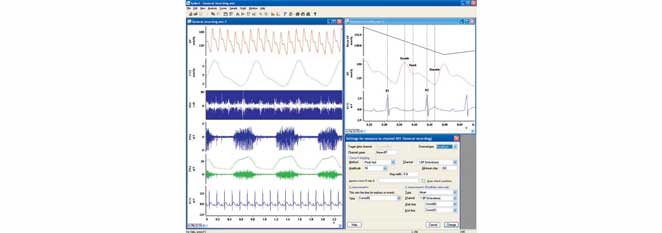
Signal is a sweep based data acquisition and analysis package. Its uses range from a simple storage oscilloscope to complex applications requiring stimulus generation, data capture, control of external equipment and custom analysis. This flexibility makes it ideal for a wide range of applications including transient capture, patch and voltage clamp, LTP studies, evoked response, and TMS.
- Signal is simple to set up for data capture and analysis
- Signal has the sampling and analysis features most researchers need, in a user-friendly environment. A built-in script language automates repetitive tasks and provides additional tools for custom analyses and applications.
- Signal includes functions for specific application areas including dynamic clamp, whole cell and patch clamp electrophysiology and evoked response including control of magnetic and other stimulus devices.
- Signal imports data recorded by many other systems, you can take advantage of this extremely versatile system to analyse existing data.
- Optional windows can show dynamic information in text and images at large scale, to be visible across the lab.
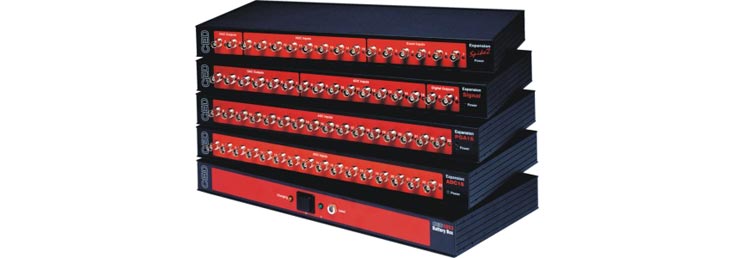
The powerful data capture and time-saving analysis functions of Signal together with one of the CED1401 family of laboratory interfaces make an extremely flexible and cost effective addition to any laboratory.
Features
- Record sweeps of waveform and marker data, free-running or time-locked to a stimulus or response
- Perform analysis on-line and off-line including waveform averaging (with error bars), power spectra and amplitude histograms
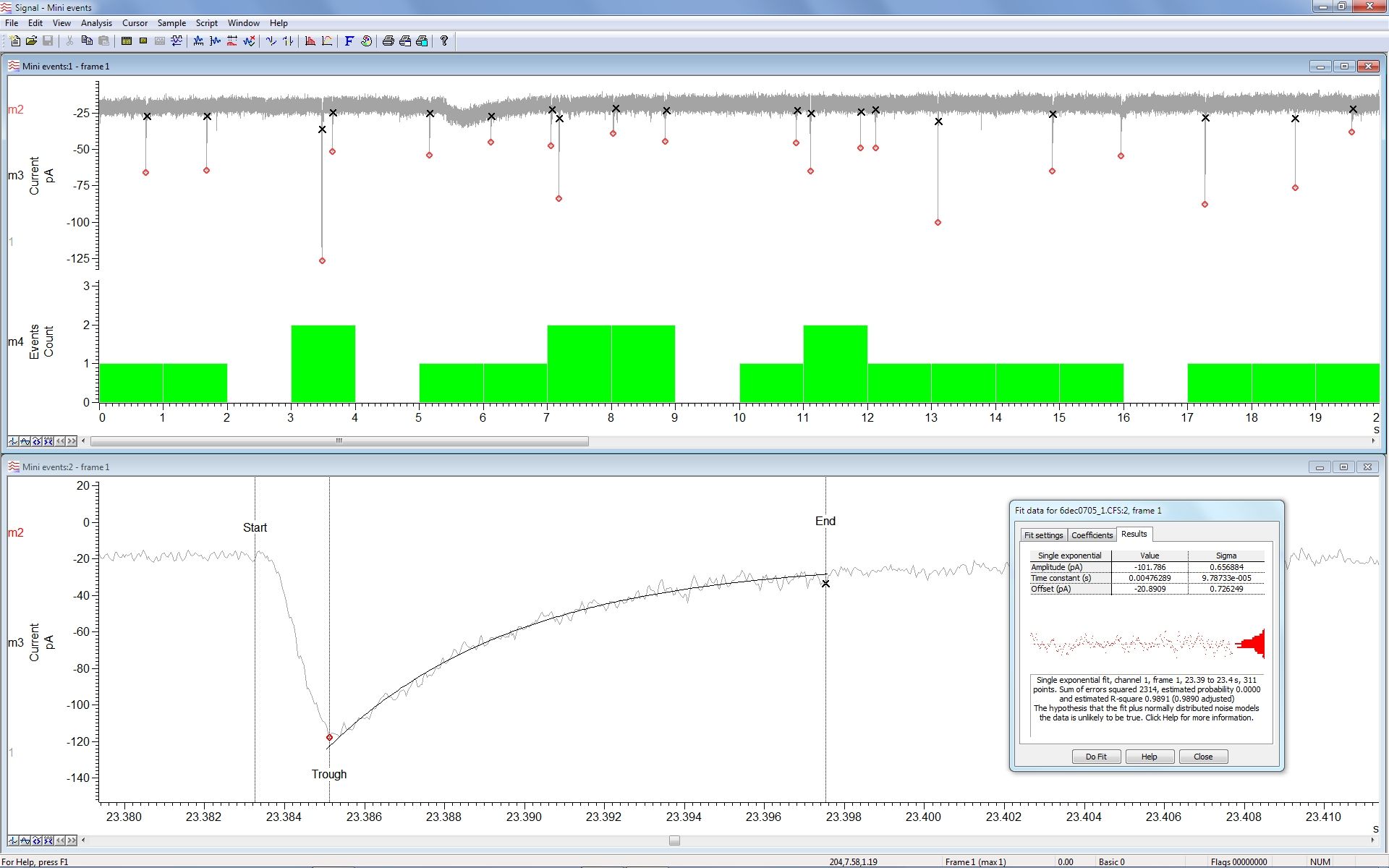
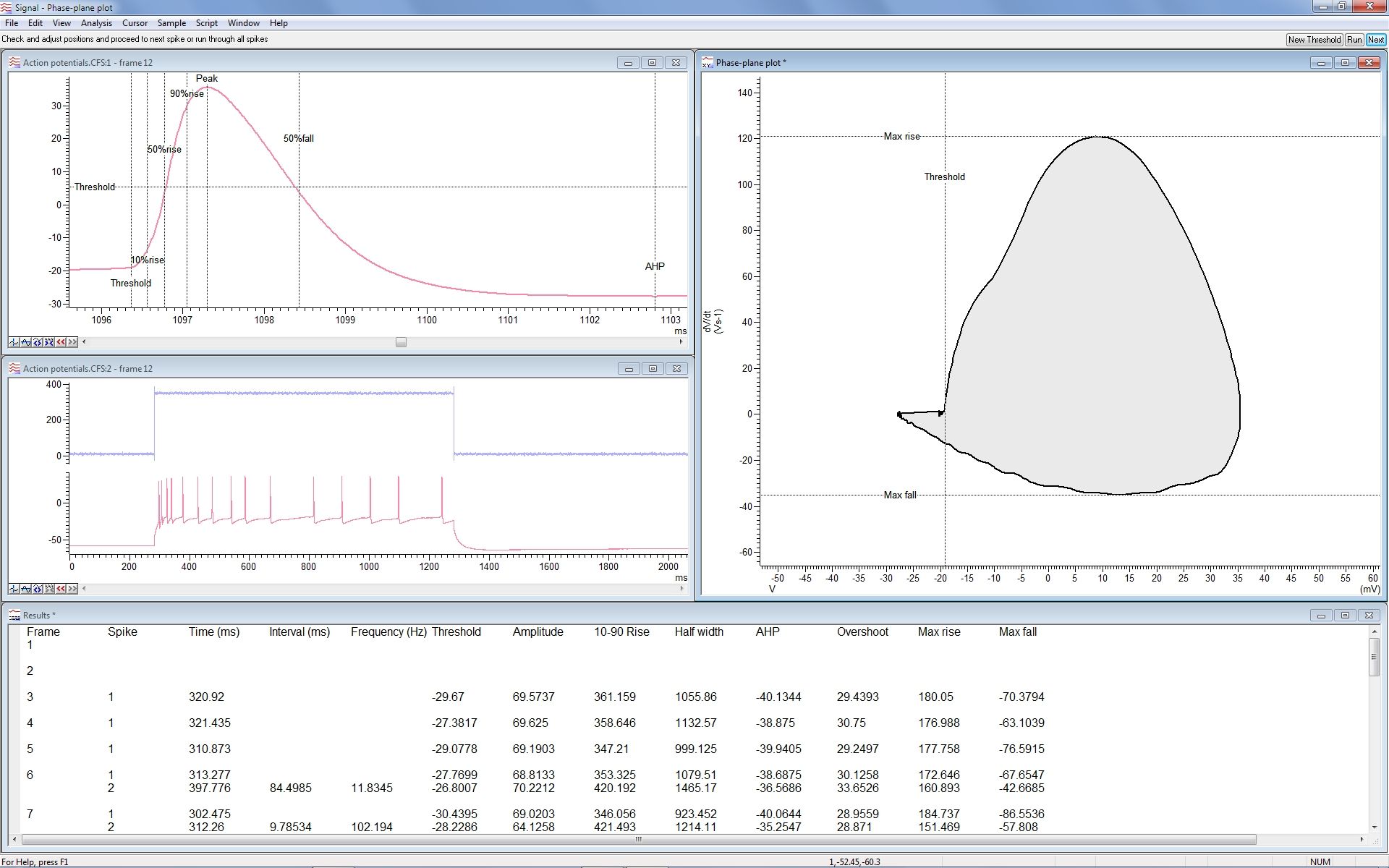
- Detect and measure waveform features in raw data and average result views and generate measurement both on and off-line in XY views or channels in the data file
- Mark detected features and events. Markers can be added interactively, by automated measurement processes or by a script
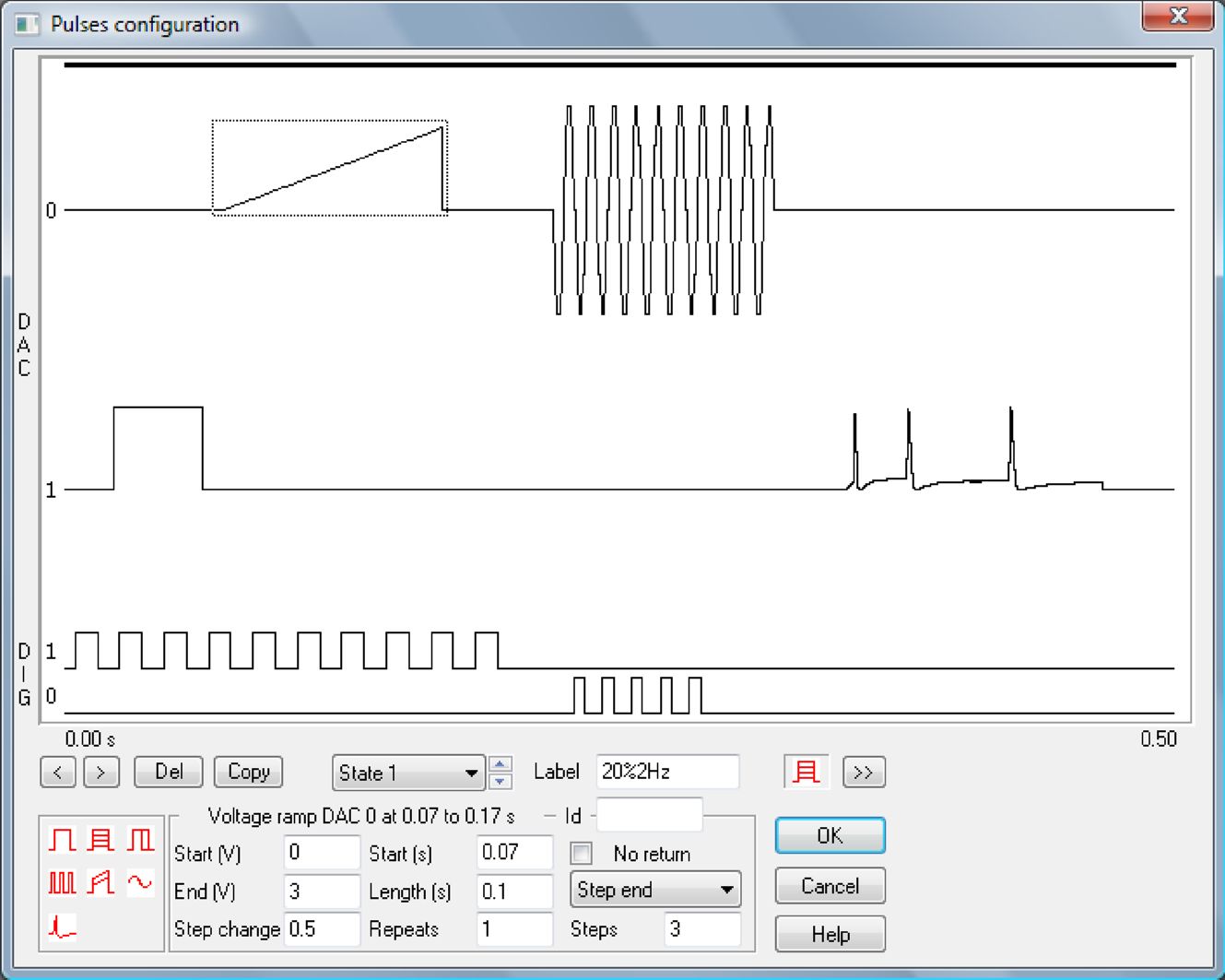
- Generate simple and complex protocols of waveform and digital output and modify the output interactively even while sampling
- Derive 'virtual channels' defined by user-supplied expressions for channel arithmetic, spectral analysis and stimulus waveform generation
- Easily manipulate data using menu or keyboard driven functions. Options include rectification, DC removal, smoothing rescaling and time shift
- Automate and customise analyses and repetitive tasks
- Digitally filter (FIR and IIR) via interactive dialogs or scripts
- Configure multiple views of the same data file and overlay data from multiple sweeps and channels, even during sampling
- Design stimulus outputs graphically, react very quickly to sampled data and apply complex interaction between inputs and outputs with scripts
- Analyse whole-cell voltage and current clamp (leak subtraction, curve fitting) and single channel patch clamp analysis (open/closed time, burst duration histograms etc.)
- Apply curve fitting using a variety of fit equations; fit coefficients can be plotted automatically to an XY view
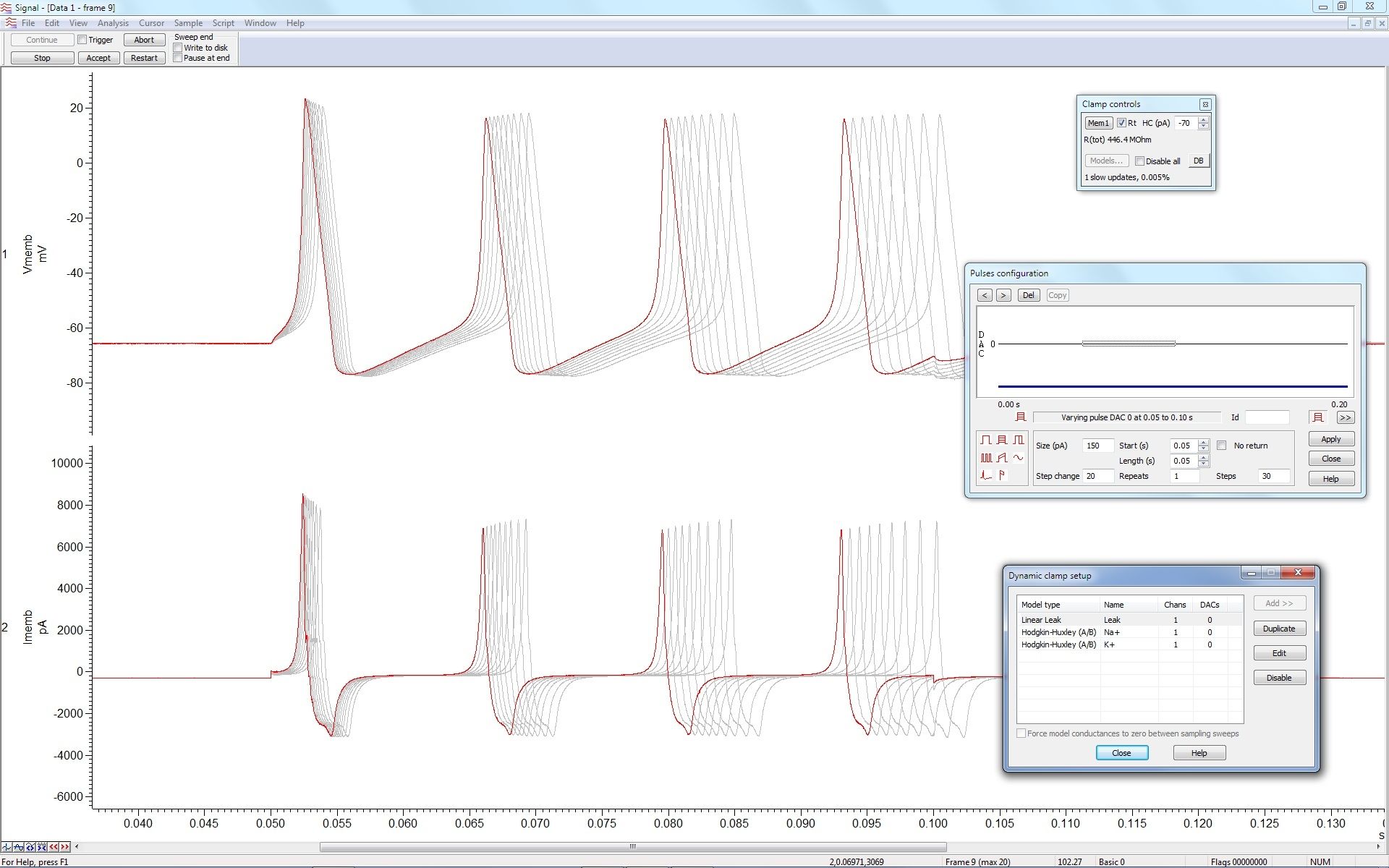
- Simulate ion channels, leaks and synapses with built-in high speed dynamic clamping support. Up to 15 clamping models can be used concurrently when sampling.
- Import data files recorded with other acquisition systems. Formats include Axon, EDF, HEKA, ASCII and binary
- Export data to other applications as text, binary or image files, write .mat files to export data to MATLAB®. The Signal data format (CFS) is freely available to programmers wishing to read and write Signal data files
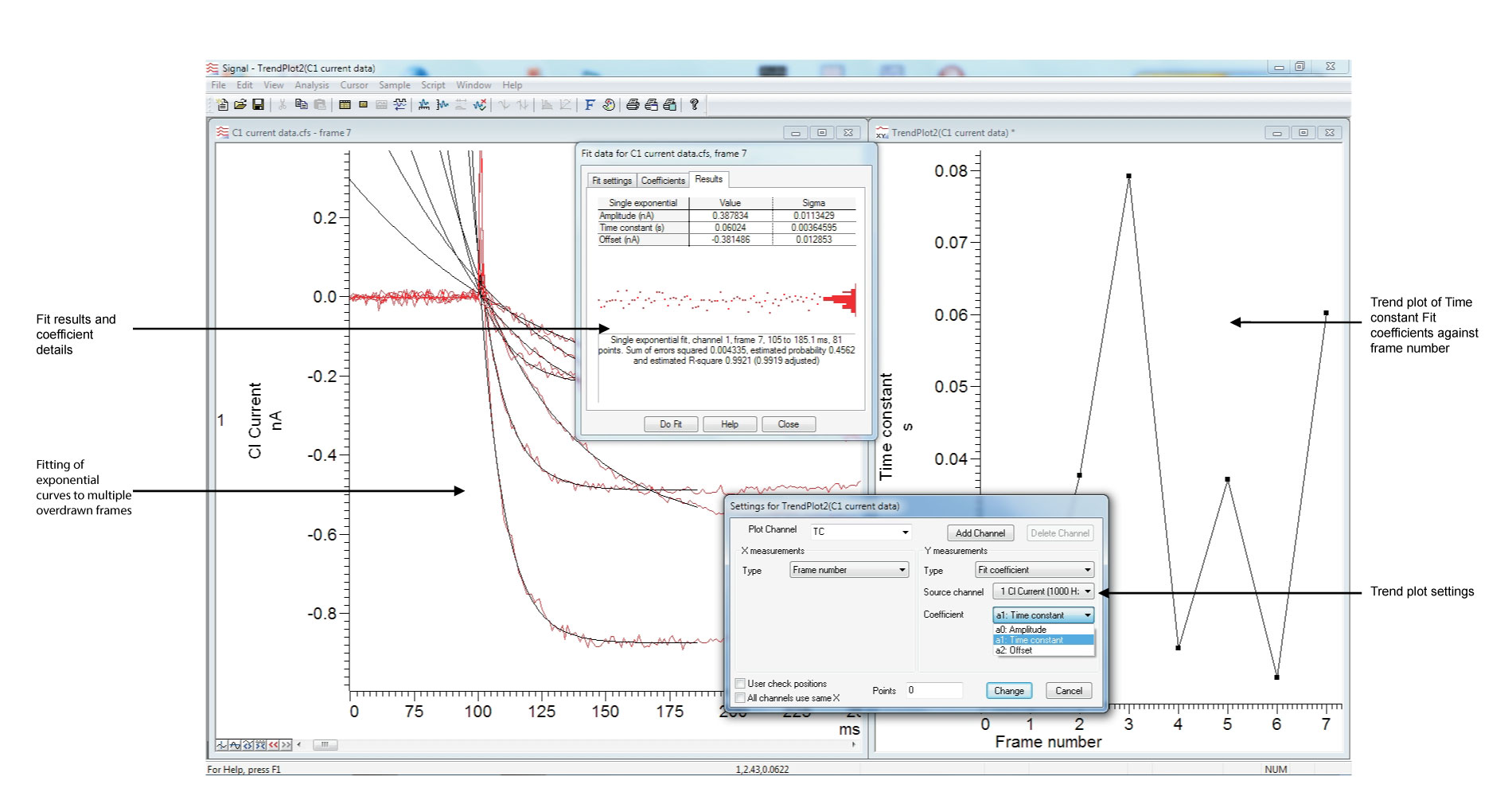
Data Acquisition
- Record and display fast sweeps of waveform data to disk with over 40 million data points per sweep with a Power1401 or towards 2 million with a Micro1401
- Output pulse, sine, ramp and stored waveforms while sampling
- Generate sets of varying stimuli on up to 8 waveform and 16 digital outputs
- Set up multiple output states, each providing differing pulse outputs or stimuli. Sequence the order and repeats of each state cyclically, randomly, semi-randomly, manually or to a predefined protocol. Frames are marked with the state used
- Sample multiple waveform inputs at aggregate rates up to 1 MHz
- Easily switch sampling configurations or output protocols
- Capture free-running or triggered sweeps with post or peri-trigger modes
- Gap free option for acquisition of continuous data
- Trigger data capture from external pulse, waveform threshold crossing or internal clock
- Sample variable numbers of points in different sweeps
- Tag frames to indicate state or artefacts for selective review and analysis
- Perform built-in and custom analyses on incoming sampled data
- Configure software controllable amplifiers including the Digitimer D360 and D440 isolated patient amplifiers and the Power1401 gain option
- Automatically adjust channel scaling in response to gain changes detected from either patch clamp amplifier telegraphs or supported software controlled amplifiers
- Simultaneously review earlier frames together with incoming data using duplicate windows
- Sample at arbitrary or varying rates with external convert input option
System requirements
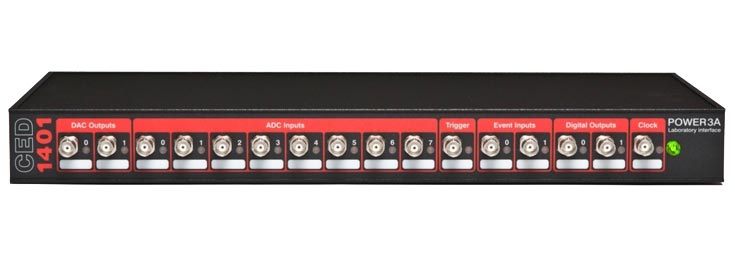
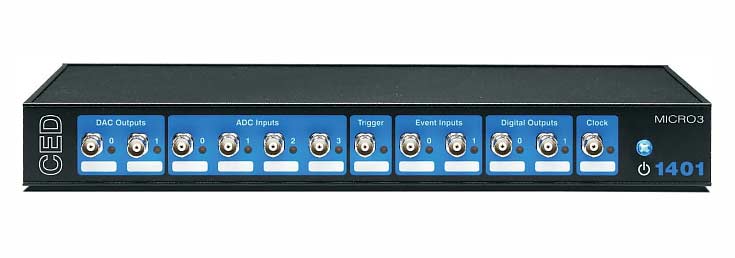
For sampling, Signal version 7 requires a CED Micro1401, Power1401 or 1401plus intelligent laboratory interface and a PC with Windows 7, 8 or 10, or Intel Macintosh running Windows, and supports 64-bit versions of Windows. The computer must be modern enough to support the SSE2 instruction set. We recommend a minimum of 2GB of RAM. Signal dynamic clamping requires a CED Power1401-3 or Power1401 mk II intelligent laboratory interface.
Both 64-bit and 32-bit OS versions are supplied; either version can be used on systems running a 64-bit OS. When installed on a 64-bit system the 64-bit version provides a performance increase and access to more memory.
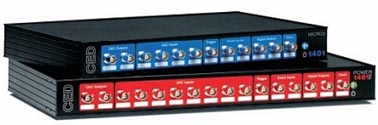
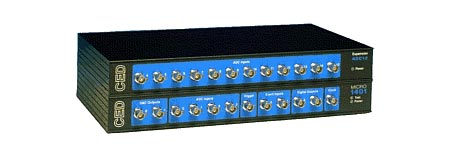
The Micro1401 and the Power1401
Applications
Evoked response and TMS Output fixed, random and pseudo-random sets of pulses with on-line and off-line waveform averages and measurements of latencies, amplitudes and areas. Signal can control MagVenture, mag & more or Magstim transcranial magnetic stimulators during data acquisition, including adjusting stimulator amplitude and timing with checks on stimulator condition. Settings are stored with the corresponding data frame.
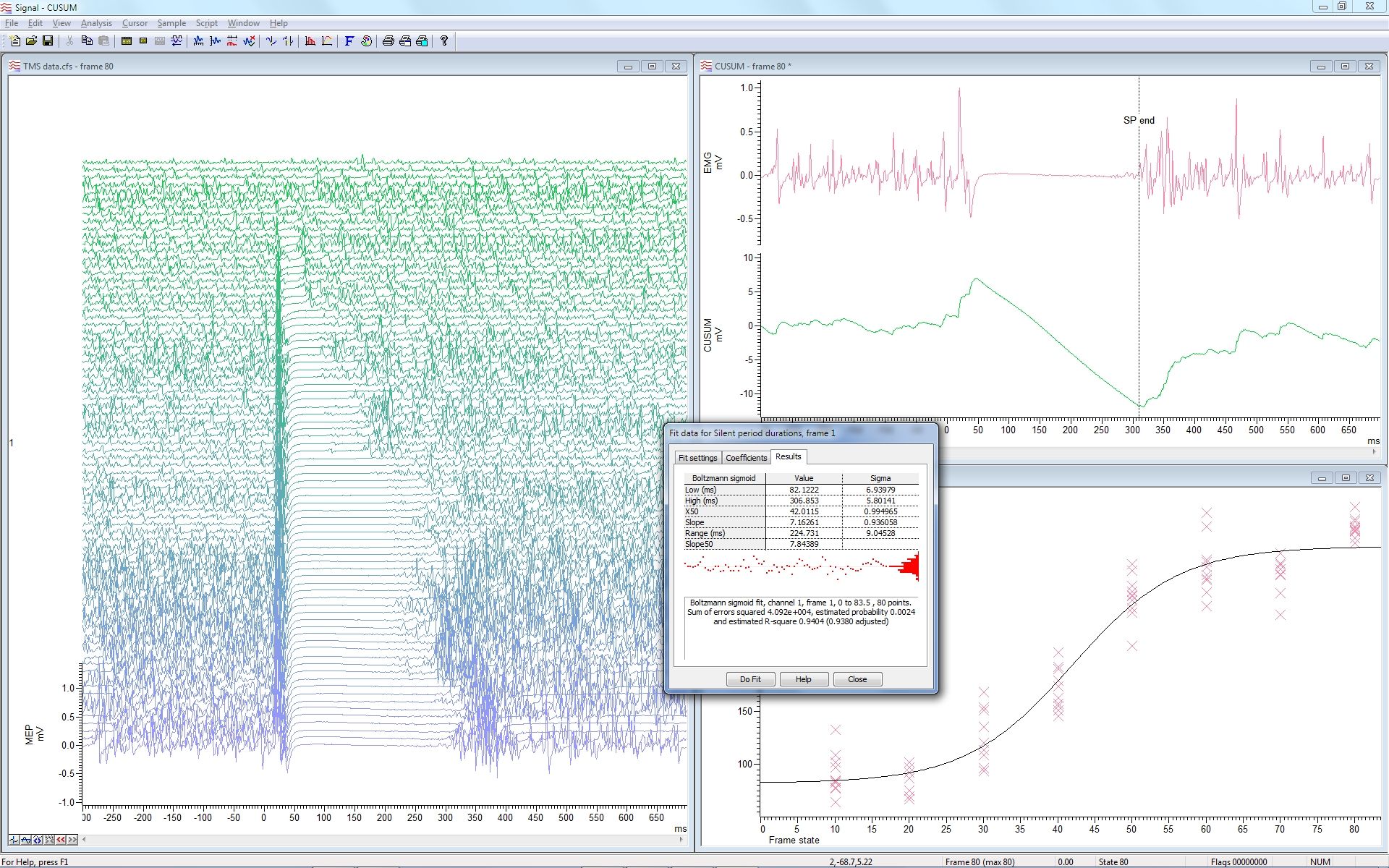
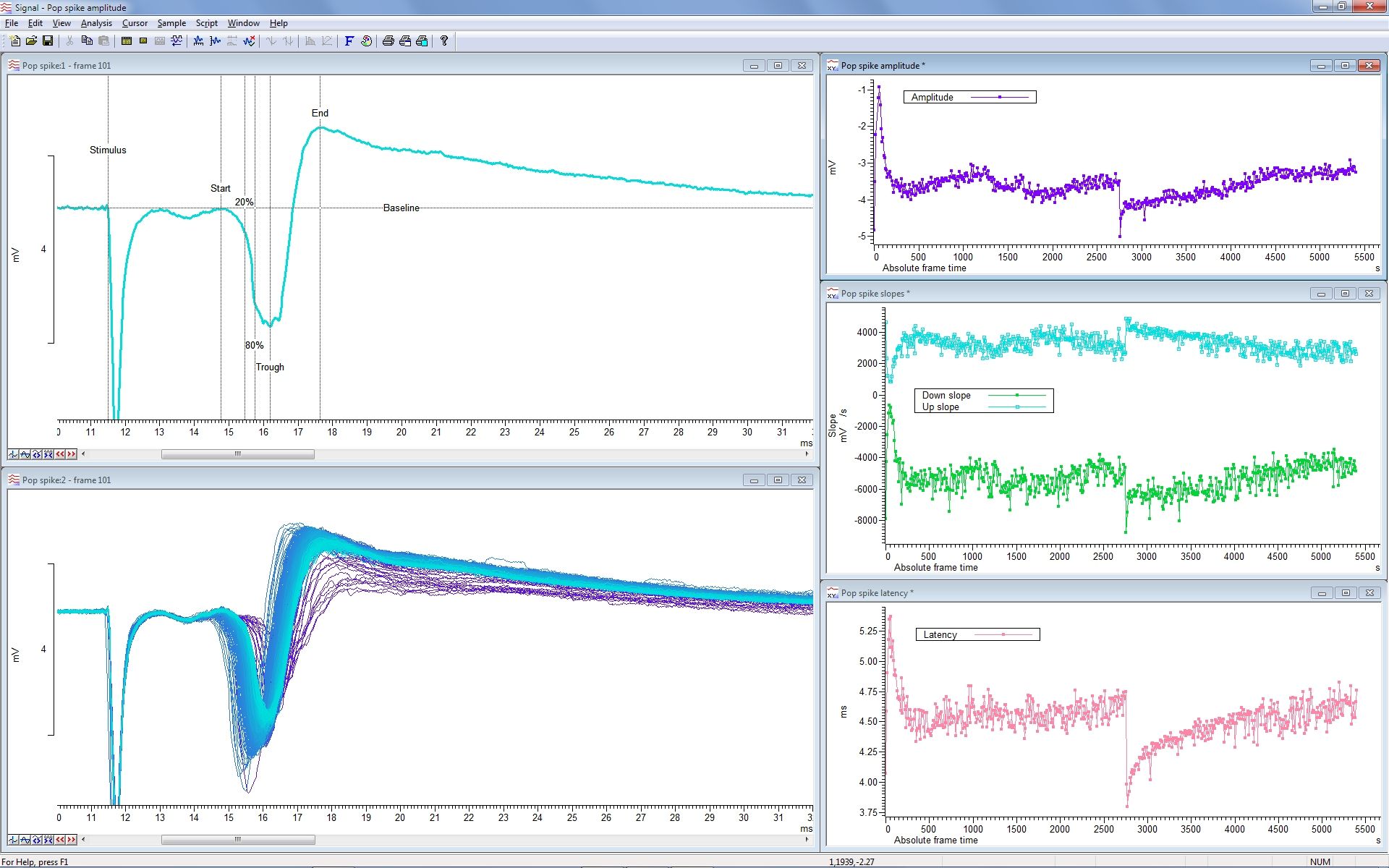
LTP and LTD studies Generate single, paired and trains of pulses on multiple outputs. Automatically measure features including baselines, amplitudes, latencies, areas, durations, percentage rise and decay times, and population spike parameters for single or multiple responses per frame.
EMG Record single and multiple channels of EMG with software control of amplifiers such as the CED1902. Perform rectification and smoothing at the touch of a button or under script control. Produce power spectra that update as new data sweeps are captured.
Auditory evoked potentials Generate complex stimulus protocols and reports under script control. Features include: automatic artefact rejection, digital filtering, generation of sub and grand averages and feature detection using active cursors.
Advanced features
Multiple sampling conditions Signal includes a comprehensive multiple output states system that provides differing pulse outputs or stimuli while sampling. The order and repeats of each stimulus can be sequenced using a predefined protocol or executed randomly, semi-randomly or under manual control. Each frame of data is marked to indicate the stimulus that was used.
Dynamic clamping High speed, fully integrated functions to simulate ion channels and leaks and use simulated synapses to generate hybrid networks. Optimised look-up tables and fast arithmetic are utilised in the Power1401-3 or mk II interface for maximum output data rates. Up to 15 selectable models can be used and switched between while sampling.
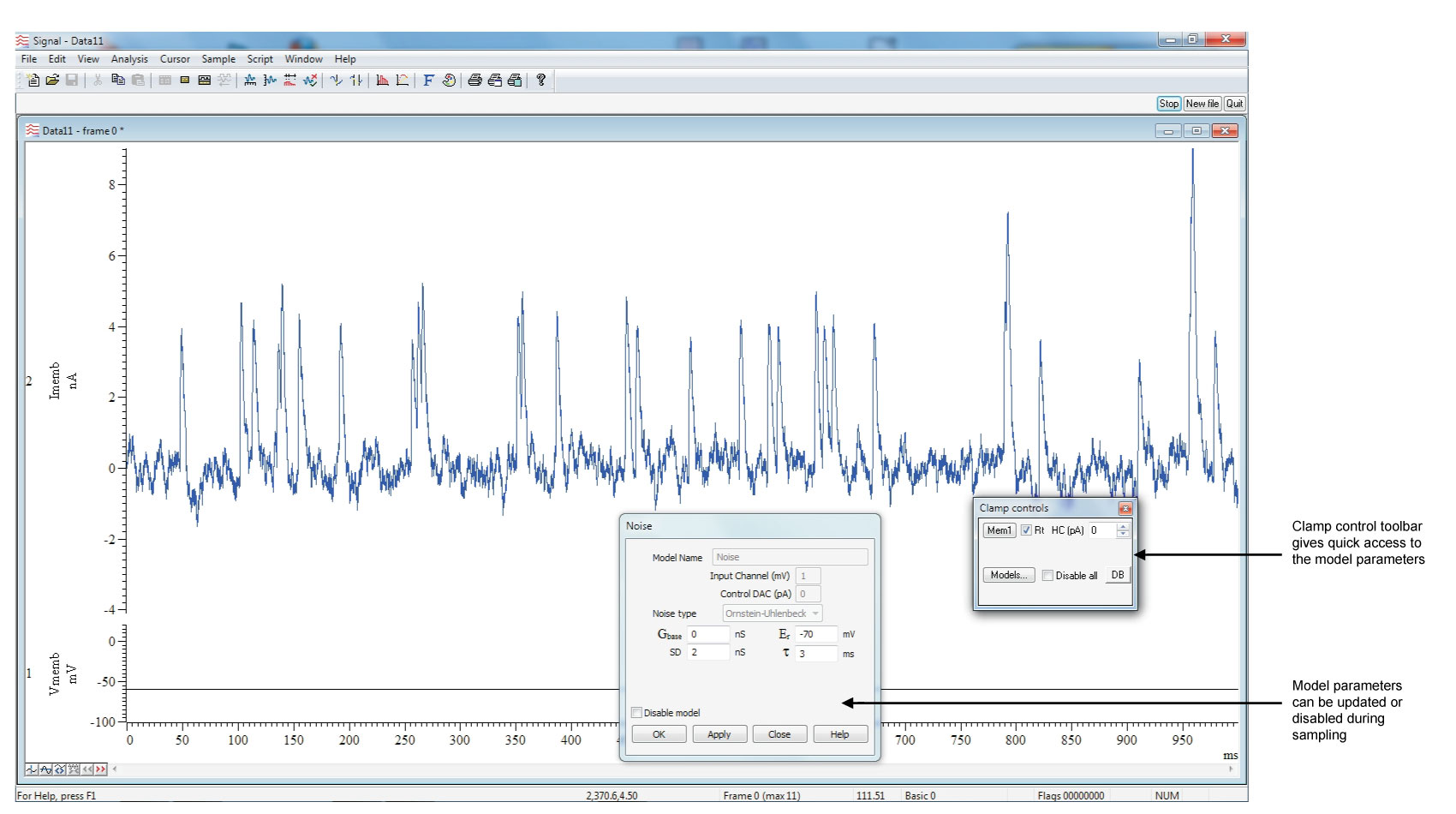
Voltage and current clamp Interactively control holding potentials and pulse outputs using the graphical sequencer. Construct I/V plots, leak subtraction and curve fits on-line and off-line.
Single channel patch clamp Detect single and multi-level channel openings on-line and off-line automatically. Produce measurements such as open/closed times and amplitudes and display result histograms. A special feature is the reverse convolution fitting of an amplifier's step response (SCAN analysis) to filtered single channel patch clamp data allowing superior time resolution of events.
Complex stimuli and experimental control
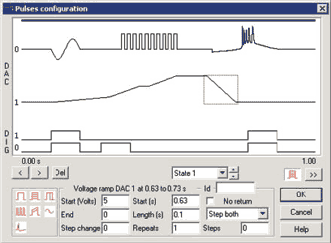
Signal incorporates a powerful sequencer function for generating digital and analogue outputs for stimulus control. Sequences are run within the 1401 interface to ensure highly accurate timing independent of the host PC operating system. There are two methods available for specifying outputs.
The graphical pulse editor covers the majority of stimulus requirements in an easy to use drag and drop environment where you build up to 256 sets of up to 500 pulses linked to the multiple states system. Outputs are fixed or they can change amplitude and duration on repeats. You can also modify the outputs while sampling continues.
If your requirements cannot be entirely met with the pulse editor you can define your outputs as a text sequence of instructions. This makes it possible to control the sequence interactively or by using the script language running on the host PC to pass variables and tables of values to the 1401. It also enables you to produce pulse protocols either time-locked to the recording frames or free running. Further experiment control options including communication through serial lines are also available using the script language.
Script language
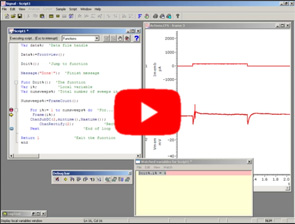
From complete beginners to experienced programmers, everybody can benefit from the built-in script language. Even simple automation of repetitive tasks with known parameters can save hours or even days of tedious analysis. Advanced scripts can provide complete experiment control with on-line application of original algorithms to sampled data in real-time.
The script language allows you to generate your own interface and design algorithms. There is a macro recording facility to provide a starting point for new scripts. The script language also includes data manipulation tools such as multi-dimensional arrays and matrix functions.
CED maintains a library of example scripts for a wide range of common and specialised applications. If the scripts included with the Signal software or those available from our web site do not fulfill your exact requirements, please contact us to discuss the available options. These include modification of existing scripts and a dedicated script-writing service.
Related Products:
|
Fast Data Acquisition |
|
Low-cost Data Acquisition Unit |
|
|
for CED Power1401 |
for CED Micro1401 |
|
of CED Data Acquisition Interfaces |
|